
Drags n Hens n
Rock & a Roller
Queer heart of Soho
10 Brewer Street
Look up to see the old signage of The Raymond Revuebar.
Steeped in history, This address was once Madame Jojo’s - a club which launched the career of many cabaret artists, but was also an exceptional chameleon of clubbing as fashions changed over the decades.
From the late 1930s the space operated as the Jack of Hearts- a modest basement bar- opened by Isow, (from Shim Sham fame) and famous for David Jones playing his first (not very well received) gig as David Bowie down there.
Brewer Street 1946 - Westminster Archivess
In the 1970s it became an adult cinema under the ownership of the aforementioned Pornography impresario Paul Raymond who became an iconic figure in Soho with his trademark Rolls Royce and ankle length fur coat. Raymond built upon Laura Henderson’s regulation-busting static dancers at the Windmill Theatre by placing his static performers on rotating podiums to get a 360 view!
Raymond, in time-honoured Soho tradition, converted his venues into private members clubs to get around the Obscenity acts legislation. He became a publisher of pornography, and was dubbed the King of Soho, gradually buying up huge swathes of the property of Soho- he came to own around 90 percent of these 87 acres that make up Soho- Raymond’s empire is now known as Soho Estates and still run by his family.
Paul Raymond with thanks to Mick Con- internet archives. s
Drag had evolved into a staple of British nightlife since WWII, including in the drag balls of the 1960s to the 80s
In 1986, Raymond opened the now legendary Madame Jojo’s- named after the club’s original compere: larger than life, iconic wit performer John Wright.
Wright was later forced to change their stage name to just Jojo due to an injunction brought by Raymond when they left the club
If Soho’s previous performers had been statues, Madame Jojo’s performers were quite the opposite… The club’s style hinged on dissolving the boundary between waiting staff and performers to create a truly immersive entertainment experience. “The Barbettes” were both servers and resident performing troupe,
Terri Fox a former Barbette and Manager, said:“The Barbettes were the heart of Jojo's. Without them it wouldn’t have been the same. There was a strict audition process. They had to be over six foot tall and be able to walk in very high stilettos – that was the uniform. The club was on two levels and to get down to the lower level, they had to slide down a handrail and land while holding a tray of drinks above their heads. “
Anne Pigalle, Soho notable reopened the music nights Jojo’s in 1987
From the 80s "Madame Jojo's" became known to many as the home of burlesque and cabaret, With an atmosphere that was electric it played a significant role in popularizing drag, serving as a premier venue right up until its dramatic and disputed closure in 2014.
It became a hub for LGBTQ+ and alternative culture bringing extravagant, high-camp theatrics into the mainstream.
Jojo's has attracted everyone from royalty, big-name celebrities, huge numbers of hen parties, West End performers, sex workers and everybody in between. The club’s no photographs policy only added to the Club’s mystique. Beyond the legendary Rhinestone sign on the seedy street visitors entered into classic old style hollywood glamour : red curtained stage, golden light and Art Deco mirrors that all helped create this iconic destination.
A Hen Night joins the queue for Madame Jojo’s days
Marcus Harris - who ran the successful White Heat nights from 2005 said -
“It’s a huge part of Soho’s history. ….. It’s like a community of fringe culture.”
White Heat presented many artists who would go on to become huge stars : The xx, Lorde, Jamie T and Adele.
Alexander Parsonage, artistic director of the Finger in The Pie theatre group and performers of a regular cabaret show said,
“Jojo’s brought together gay culture and burlesque culture with mainstream music and club nights. Everyone went there. It was a rare place that brought together all these worlds.”
And
“The closure of Madame Jojo’s plays to the weird gentrification that’s happened in Soho…… For 400 years its been the gloriously seedy underbelly of London, where some of the most interesting subculture has thrived, -
29th November, 2014. A Peace Party Procession & Vigil for London’s Alternative Nightlife venues and its community Credit_ Rachel Megawhat
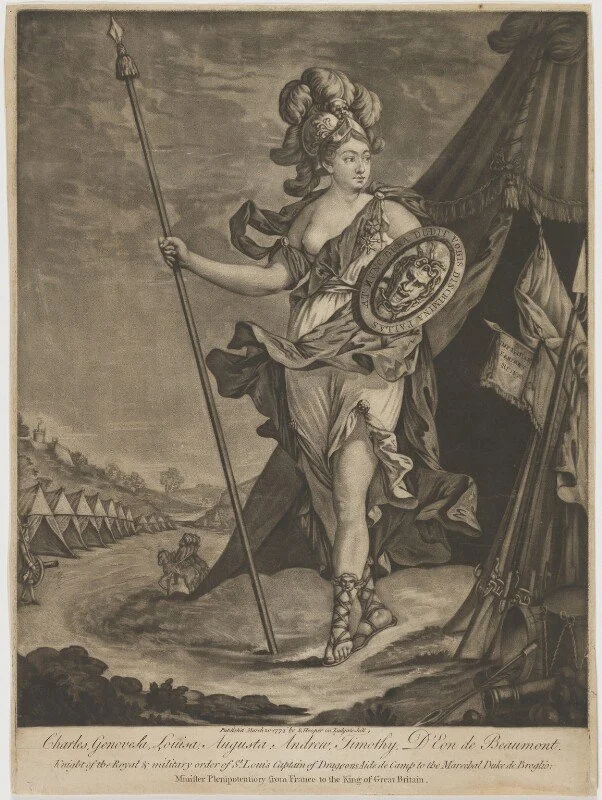
Chevalier-d’Eon by permission of National Portrait Gallery
Of course Madame Jojo’s was by no means the first drag story of Soho;
Enter - The Chevalier d'Eon who came to London over 2 centuries earlier.
The Chevalier arrived to work in the French Embassy, in 1763 in the immediate aftermath of the Seven Years War
They got on so badly with the boss - the Ambassador, that they hardly ever went to work, staying instead at home in 38 Brewer Street.
After a particularly bitter row The Chevalier was dismissed and in order to make ends meet, started selling the Embassy's confidential papers to the Russians.
In 1777 they began dressing as a woman probably initially as a disguise , if this was a ruse it was quickly discovered because King Louis XVI summoned the Chevalier back to France.
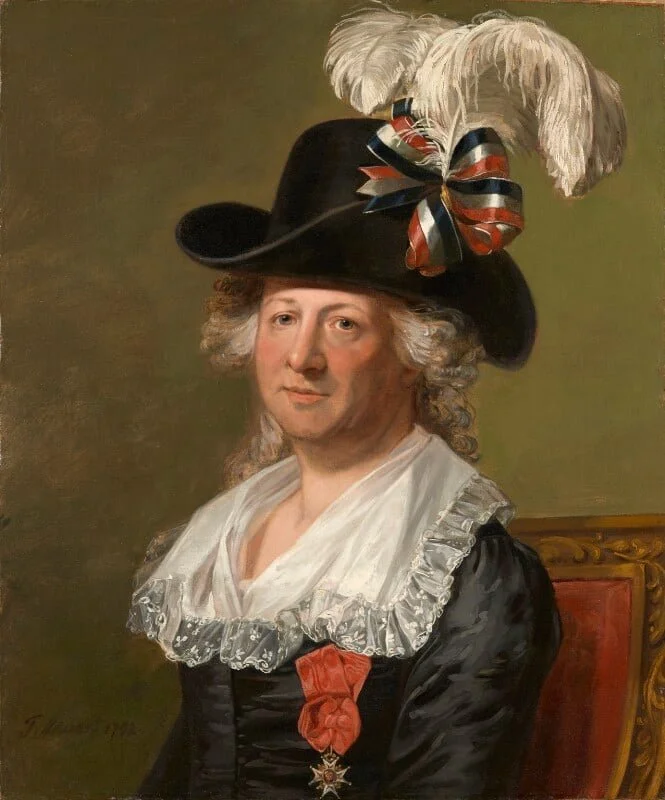
After crossing the Channel in female dress, the Chevalier found themself dismissed from the army on grounds of gender.
Queen Marie Antoinette offered a Trousseau (the clothing and linens, that a bride assembles for her marriage) to the Chevalier… which they rather ungraciously rejected, and then hastened back to Brewer Street where they lived out the rest of life as a woman.
The Chevalier D’Eon was perhaps the only Soho woman in the C18th to rival the notoriety and flamboyance of Theresa Cornelys.
Head up Brewer St to Wardour street and take a left.